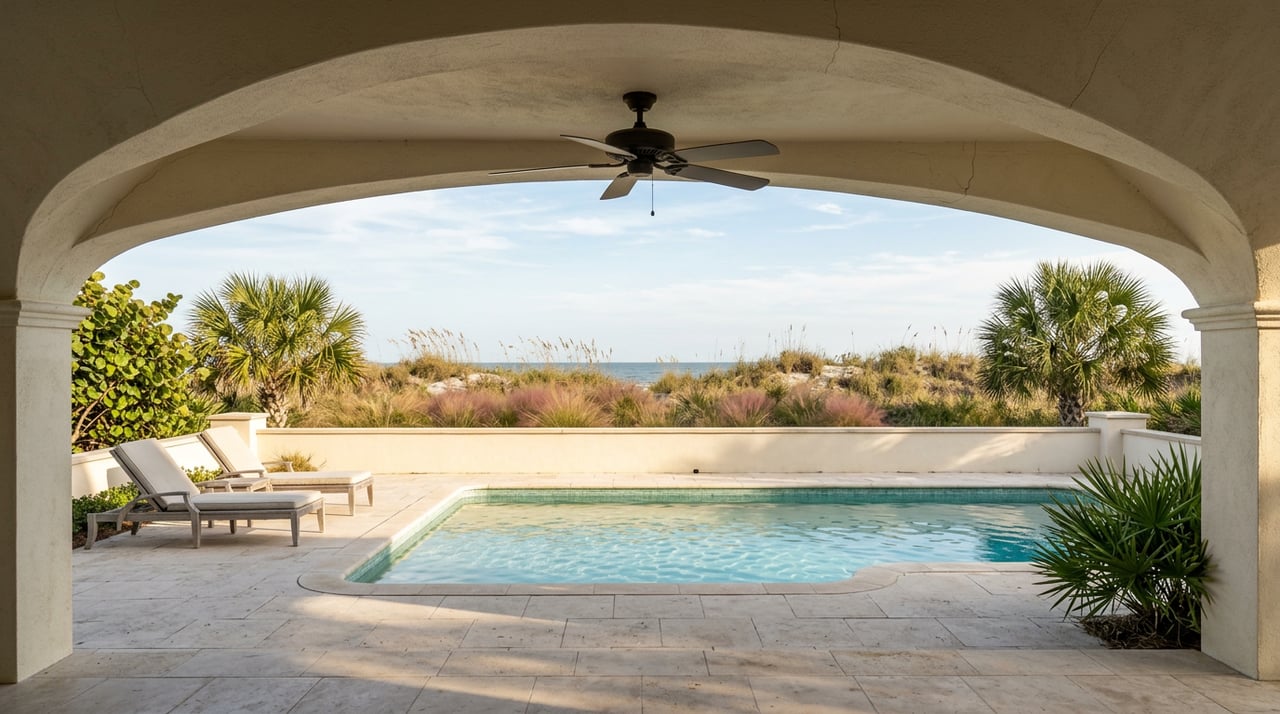
Buying Oceanfront in Ponte Vedra Beach: What to Know
March 5, 2026
March 5, 2026
You can fall in love with the ocean in a heartbeat. Buying it takes a little more care. If you’re eyeing an oceanfront home in Ponte Vedra Beach, you already know the view is priceless. What you may not know is how different oceanfront due diligence, insurance, and permitting can be from a standard inland purchase. In this guide, you’ll learn the exact steps, reports, and offer tactics that give you confidence from first showing to closing. Let’s dive in.
Ponte Vedra’s oceanfront is a thin, high-value slice of the market. Inventory comes in waves, and when the right home appears, you want to be ready. Values can vary widely based on ocean frontage, dune stability, permitted access, and whether marine structures are present.
Because shoreline and dunes change over time, local projects can shape supply and timing. St. Johns County runs ongoing nourishment and dune restoration along this stretch, which can affect beach profile, access, and even listing windows. Keep an eye on the county’s Ponte Vedra Beach Restoration Project page for current activity and easement details.
Start with a lender who understands jumbo and coastal lending. Oceanfront homes often require portfolio or jumbo loans. Lenders will review elevation, insurability, and the condition of seawalls or docks. Ask your lender early what documents they will need so you can gather them fast: survey, insurance quotes, and any elevation or marine-structure reports.
Appraisals can take longer for unique waterfront. Support your valuation by preparing a property file for the appraiser that includes survey data, any Elevation Certificate, permit history, and recent comparable oceanfront sales. This helps reduce surprises in underwriting and timing.
Oceanfront purchases add a few specialists to your normal home inspection. Plan these items early and schedule them within your inspection window.
Ask the seller for any existing Elevation Certificate. If none exists, order one quickly. Many insurers and lenders use it to price and approve flood coverage. For regulatory maps, use FEMA’s Flood Map Service Center and review how FEMA’s Risk Rating 2.0 works using this NFIP guidance. St. Johns County’s Flood Facts page also explains local programs and services that can help.
Have a marine contractor or coastal engineer check any seawall, tiebacks, and dock pilings. Marine structures live a hard life in saltwater. A formal report should note age, materials, signs of settlement, and permit history. Rebuilding or replacing a long seawall can be a significant capital item, so it pays to understand condition early. For a general sense of how material and length influence pricing, review this industry reference on seawall and bulkhead costs.
Ask your home inspector to look closely at corrosion, roof attachments and flashing, exterior metals, window and door systems, and HVAC condensers. Salt air accelerates wear. A wind mitigation inspection can also document features that may reduce premiums and reveal upgrade opportunities.
Confirm whether the property is connected to public utilities. Some older or more isolated parcels may have septic or a private well. A septic inspection and pump-out history can inform your maintenance plan and insurance and lending.
Order a current, detailed survey that identifies mean high-water and mean low-water lines, measured frontage, and any recorded easements. These details matter for access, dune work, and potential future nourishment. Florida law treats the wet-sand area seaward of the mean high-water line as public, while the dry-sand area landward of that line may be private unless public rights were otherwise established. Learn more from the Florida Bar’s primer on public access and dry sand.
Much of Florida’s beachfront is regulated by the Coastal Construction Control Line. Work on or near dunes often requires state authorization. Before closing, review county records and the Florida Department of Environmental Protection’s CCCL program to understand what has been permitted and what future projects could require.
Oceanfront homes require a tailored insurance package. Build this early so you know your carrying costs and lender requirements.
FEMA’s Risk Rating 2.0 changed how the NFIP prices policies. Premiums now factor in distance to water, first-floor height, construction type, and rebuild cost. Get quotes early using your address and any Elevation Certificate. St. Johns County participates in FEMA’s Community Rating System, which can provide a countywide discount on NFIP premiums. You can confirm details with the county’s Flood Facts and review federal guidance on Risk Rating 2.0.
Most Florida homeowner policies carry a separate hurricane deductible. It is usually a percentage of your dwelling coverage. Know how that percentage translates to real dollars on a high-value home so you can plan your reserves. The state’s consumer guide explains how deductibles are applied and when they trigger. Review the Florida hurricane deductible guide.
For high-value coastal properties, private homeowners and private flood carriers often round out coverage. Shop options early and discuss umbrella coverage with a broker who understands coastal properties. The goal is clear: confirm insurability and likely deductibles before you write an offer.
Florida’s CCCL rules exist to protect dunes and wildlife while keeping people and property safer. If you plan to add, alter, or rebuild anything near the dune line, expect to consult the state and county. Learn the basics on FDEP’s CCCL page and coordinate with county building officials as part of your planning.
St. Johns County and the U.S. Army Corps of Engineers advance multi-mile strategies to maintain dune systems and widen beaches. These projects can require recorded easements for staging and sand placement. They may also create brief construction windows or access adjustments. Review the county’s Ponte Vedra Beach Restoration Project and the USACE Jacksonville District’s Ponte Vedra overview to understand timing and scope.
The public generally has rights in the wet-sand area seaward of the mean high-water line. Dry sand can be private unless public rights have been established. Local custom, recorded easements, or HOA club rules may add another layer. Do not assume full private control or total public access without checking the chain of title and local rules. For statewide context, see Florida’s beach access summary on Beachapedia.
Oceanfront living comes with elevated maintenance. Salt air speeds corrosion on metal fixtures and mechanicals. Plan for more frequent HVAC service, diligent roof and flashing checks, and corrosion-resistant materials for exterior hardware.
If a seawall or bulkhead is present, put regular inspections on your calendar and keep a reserve for repairs. Length, material, and site conditions drive costs. This industry overview of bulkhead costs helps you think in terms of lifecycle planning.
Dune stewardship also matters. Native vegetation like sea oats and seagrape helps stabilize dunes and can be regulated. Before removing or planting on the dune, check county and state rules. For a sense of suitable coastal plants, explore UF/IFAS guidance on Florida native seagrape.
In Ponte Vedra’s luxury segment, terms and certainty can be as important as price. Arrive with a strong preapproval and proof of funds that reflect coastal and jumbo realities. Sellers notice when your lender already has key property items like an Elevation Certificate and insurance quotes.
Do not waive inspections. Instead, use a shorter but realistic inspection period. Keep specialty contingencies for marine structures if a seawall or dock is present. Attach a simple plan to your offer that shows how you will complete inspections quickly.
Support the appraisal. Share a packet with the appraiser that includes the survey, any EC, permit history, and a short list of recent oceanfront comps. Non-price levers also matter. Flexible closing dates that match renovation schedules, clear timelines for deliverables, and reasonable escrow structures can help you win without simply raising your offer.
Buying oceanfront in Ponte Vedra Beach is equal parts lifestyle and strategy. With the right team, the right reports, and a smart offer, you can secure the home that keeps you close to the water and confident about the details. If you would like a discreet, hands-on partner from first tour to closing, reach out to Michele Tremblay to Request a Private Consultation.
Stay up to date on the latest real estate trends.
Etiam non quam lacus suspendisse faucibus interdum. Orci ac auctor augue mauris augue neque. Bibendum at varius vel pharetra. Viverra orci sagittis eu volutpat.
LET'S CONNECT

MICHELE TREMBLAY
13000 Sawgrass Village Cir. Bldg. 1, #3 Ponte Vedra Beach, FL 32082