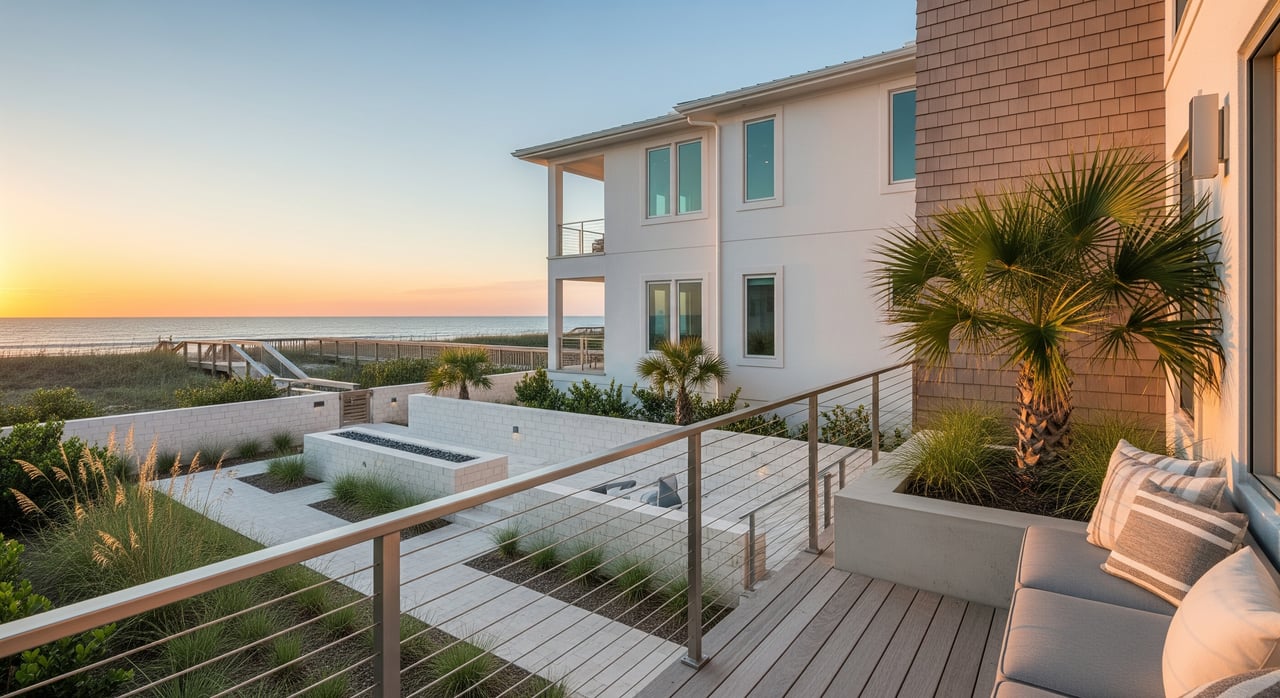
Condo vs Townhome in Jacksonville Beach: What to Know
December 18, 2025
December 18, 2025
Torn between a condo and a townhome at the beach? You are not alone. In Jacksonville Beach, both offer a low‑maintenance coastal lifestyle with very different ownership, fee, insurance, rental, and financing implications. If you want confidence before you buy, understanding these differences is your best first step. This guide breaks down how each option works here at the coast, what to watch for, and a smart due‑diligence plan so you can choose with clarity. Let’s dive in.
| Topic | Condo (typical) | Townhome (typical) |
|---|---|---|
| Ownership form | Unit ownership plus shared common elements managed by an association | Varies: fee‑simple lot with HOA or a condo‑legal structure; read the declaration |
| Exterior responsibility | Association usually handles exterior, roof, and building systems | If fee‑simple with HOA, owners often handle roof/exterior unless HOA assumes it |
| Insurance | Association master policy for structure; owner carries HO‑6 for interiors and personal property | If fee‑simple, owner carries full homeowners policy (HO‑3/HO‑5); HOA insures common areas |
| Monthly fees | Often higher when buildings have elevators, pools, parking structures, or onsite staff | Often lower if fewer amenities; can be similar in amenity‑rich or gated communities |
| Maintenance | Low personal maintenance; association handles major exterior work | Varies widely; can be low if HOA covers exterior/yard, higher if owner is responsible |
| Reserves & assessments | Association reserves fund big repairs; special assessments can be substantial | Similar risk of assessments; scope depends on what the association covers |
| Rental rules | Frequently regulated: minimum lease terms, caps, and approvals | HOAs may regulate too; fee‑simple townhomes sometimes offer more flexibility |
| Financing | Condo projects may need lender approval; rules on owner‑occupancy and litigation matter | Generally easier if fee‑simple; attached townhomes can be treated like single‑family |
| Privacy & noise | More shared walls/floors; potential for noise from neighbors | Often fewer units per building; still may share walls |
| Amenities & access | Many beachfront buildings offer elevators, pools, and secure parking | Private garages/patios are common; neighborhood design varies by community |
In Florida, condominiums are primarily governed by the Florida Condominium Act (Chapter 718). You own the interior of your unit and share an undivided interest in the common elements. The association manages the building, common areas, and typically carries a master insurance policy for the structure.
Your day‑to‑day maintenance is minimal, but you pay monthly fees that fund operations, amenities, insurance, and reserves. Since Jacksonville Beach is a coastal environment, healthy reserves are especially important because salt air and wind accelerate wear.
Townhomes in Jacksonville Beach may be organized in two ways. Some are legally condominiums and operate much like a traditional condo. Others are fee‑simple homes governed by a homeowners’ association under Chapter 720. In a fee‑simple setup, you often own the structure and lot, and you may be responsible for the roof, exterior, and limited yard unless the declaration assigns those items to the HOA.
The big takeaway: do not assume. Read the community declaration to confirm who owns and maintains the roof, siding, windows, and driveways, and how insurance is structured.
Condo fees often include exterior maintenance, building insurance, landscaping for common areas, elevator service, pool operations, trash, and sometimes cable or Internet. They also fund reserves for future capital projects. Fees tend to be higher in buildings with elevators, pools, parking structures, or onsite management.
Townhome HOA fees vary widely. In some communities, the HOA covers exterior painting and roofing. In others, the HOA focuses on common areas and amenities, and owners handle their own exteriors. Gated or amenity‑rich townhome communities can have fees comparable to condos.
At the beach, reserves matter. Ask for the latest reserve study, current budget, and a record of past and pending special assessments. Building age, proximity to the ocean, and amenity level all influence the fee picture.
With a condo, you typically focus on interior upkeep while the association manages major building systems and exteriors. That can feel effortless, but you share the financial responsibility with other owners. If reserves are short or a big repair pops up, special assessments can be significant, especially for coastal items like roof replacements, corrosion remediation, parking structure repairs, or seawall work.
With a fee‑simple townhome, you may control exterior timing and contractor selection if the HOA does not assume those items. That autonomy can be a plus, but you are also budgeting for roofs, exterior paint, and any fences or driveways the declaration assigns to you. Either way, coastal properties face salt‑air corrosion and wind exposure, which influence maintenance schedules and costs.
Jacksonville Beach is low‑lying and exposed to Atlantic storms, so insurance planning deserves early attention. In a condo, the association’s master policy typically covers the building structure and common areas. You carry an HO‑6 policy for interior improvements, personal property, liability, and often loss assessment coverage to help with association deductibles or shortfalls.
If you buy a fee‑simple townhome, you generally need a full homeowners policy (HO‑3 or HO‑5) for the structure plus your contents and liability. Flood insurance is often required by lenders if the property sits in a Special Flood Hazard Area. Premiums depend on the flood zone, elevation, and construction, and V‑zones near the ocean tend to be higher risk.
In Florida, wind coverage may be challenging at the coast. Some owners and associations rely on the state’s insurer of last resort when private options are limited. Associations often carry sizable hurricane deductibles that can be passed through to owners after a storm. Before you finalize a purchase, review the association’s insurance certificates and deductible amounts and get quotes for your unit or townhome, including flood.
Rental policies are set by each association, and Jacksonville Beach adds a municipal layer. Many associations regulate rentals with minimum lease terms, rental caps, owner registration, and approval requirements. Some buildings and HOAs limit or prohibit short‑term rentals.
The city may have rules for rental registration, business taxes, occupancy, and safety standards. Fines for violations can be steep. If rental income is part of your plan, request the community’s rental rules and any recent amendments, verify the owner‑occupancy ratio, and confirm city requirements so your strategy aligns with both association and local regulations.
Condos are financed differently than single‑family homes. Lenders review the project’s financial health, owner‑occupancy levels, budget and reserves, insurance, and litigation. If a building does not meet agency guidelines, your loan options can be limited or more expensive. This affects both your purchase and future resale.
Fee‑simple townhomes are typically underwritten like single‑family homes, which can make financing more straightforward and broaden your buyer pool later. If a townhome is legally a condo, expect the same project review rules as a traditional condo.
For resale, buyers consider association governance, reserve strength, rental flexibility, and maintenance history. In Jacksonville Beach, demand splits between lock‑and‑leave convenience and buyers who prefer more autonomy. Position your property accordingly.
Lifestyle is where the condo‑versus‑townhome decision often becomes clear. Many condos near the ocean offer elevators, pools, and secure or covered parking, which make daily beach living simple. You will want to confirm storage for boards and beach gear, guest parking rules, and noise levels near restaurants and nightlife.
Townhomes can offer private garages, patios, and a more residential feel while still keeping you close to the sand. If stairs are a concern, note that many townhomes are multi‑level. For aging‑in‑place or accessibility, an elevator building can be a practical advantage. Pet rules, parking requirements, and proximity to shops, parks, and healthcare can all tip the balance based on your needs.
Use this list to compare specific communities and units with confidence.
Ready to compare specific buildings and communities in Jacksonville Beach, side by side? For a community‑specific breakdown of fees, insurance responsibilities, and current rental rules, request a Private Consultation with Michele Tremblay. You will get white‑glove guidance tailored to your lifestyle, budget, and timeline.
Stay up to date on the latest real estate trends.
Etiam non quam lacus suspendisse faucibus interdum. Orci ac auctor augue mauris augue neque. Bibendum at varius vel pharetra. Viverra orci sagittis eu volutpat.
LET'S CONNECT
MICHELE TREMBLAY
13000 Sawgrass Village Cir. Bldg. 1, #3 Ponte Vedra Beach, FL 32082